Vintage Cowboy Font for Authentic Western Branding
As a small business owner who’s built everything from scratch—hand-poured candles, hand-stitched leather goods, and even a cozy café with porch swings and mason-jar drinks—I’ve learned that consistency isn’t just about color palettes or logos. It’s about type. The right font quietly tells customers who you are before they read a single word. That’s why I reached for Vintage Cowboy when rebranding my desert-themed apothecary shop—and haven’t looked back.
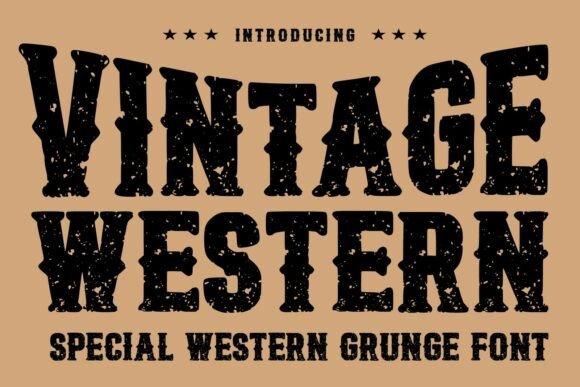
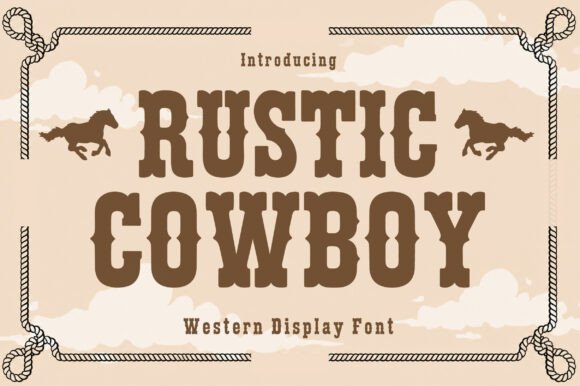
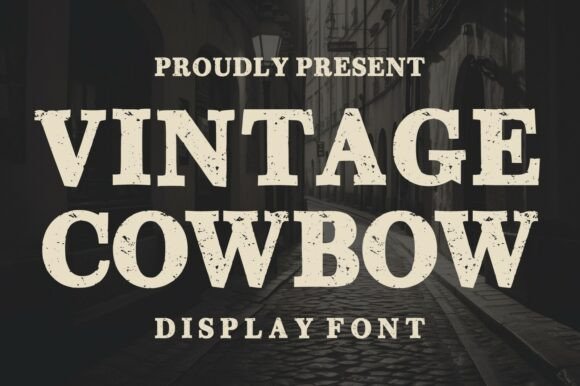
Vintage Cowboy is a display font with unmistakable western character: bold serifs, subtle distressing, and the kind of weathered charm you’d find on a 1920s saloon sign or a faded rodeo poster. It’s not overly ornate, but it’s never generic. Its texture feels earned—not artificially aged, but genuinely lived-in. That authenticity translates directly to how customers perceive your brand: trustworthy, grounded, and intentional.
I use Vintage Cowboy where first impressions matter most—on product labels, storefront signage, and Instagram story banners. Its strong shapes hold up beautifully on small spaces like candle jar tags or soap bar wrappers, especially when printed in rich ink on kraft paper or matte sticker stock. On mobile screens, it remains legible at headline sizes (36pt+), and its generous letter spacing prevents crowding in social media thumbnails—even when overlaid on rustic backgrounds or grainy photos.
Here’s how it works across real touchpoints:
- Logos & storefront signs: I paired Vintage Cowboy with a clean sans serif (like Montserrat or Inter) for my boutique’s logo—using Vintage Cowboy for the shop name and the sans for the tagline. The contrast feels balanced: bold personality up front, quiet clarity behind it.
- Packaging & labels: For my line of mesquite-scented candles, I set “Saguaro Smoke” in Vintage Cowboy above a simple ingredient list in a light-weight serif. Customers tell me the label feels “like it belongs on a shelf next to heirloom goods.”
- Menus & print collateral: At my weekend farmers’ market stall, I print laminated menus using Vintage Cowboy for dish names (“Chili Con Carne,” “Pecan Pie”) and a highly readable serif (like Lora or Merriweather) for descriptions. It adds warmth without sacrificing function.
- Social graphics: On Pinterest and Instagram, I use Vintage Cowboy for quote overlays and limited-time offer banners (“Grand Opening — This Weekend Only”). Its texture gives digital content tactile weight—something flat, ultra-modern fonts often lack.
- Thank-you cards & stickers: Handwritten notes feel personal, but consistent branding matters too. I stamp “Thanks, Partner” in Vintage Cowboy on kraft thank-you cards—and use the same font on custom stickers for packaging seals. It ties the experience together.
That said, Vintage Cowboy isn’t meant for body text or long paragraphs. As a display font, it shines brightest at larger sizes—as headlines, logos, or short accent phrases. Think of it as your brand’s voice when it leans in and speaks with confidence: at the top of a webpage banner, on a product launch email subject line, or embossed on a gift box lid. Use it where attention is scarce and impact is essential.
Pairing is straightforward and effective. Because Vintage Cowboy carries so much visual personality, it pairs best with typefaces that step back gracefully. A neutral sans serif (like Open Sans or Poppins) provides contrast and readability for supporting text. For a warmer, more traditional pairing, try a classic serif like Playfair Display or Crimson Text—just keep the weight light or regular to avoid competing with Vintage Cowboy’s presence.
Before committing to Vintage Cowboy across your entire brand, test it in context. Print a mock-up label at actual size. Load a website banner into your phone and scroll past it—does it register in under two seconds? Try it in three different colors against your background textures. And always check the commercial license: if you’re putting this font on physical products (tote bags, mugs, jars), selling digital templates, or using it in client work, confirm the license covers those uses. Most reputable vendors clearly state usage rights—but don’t assume.
For handmade product sellers, café owners, and service-based entrepreneurs building brands rooted in place, craft, or tradition, Vintage Cowboy offers something rare: distinction without detachment. It doesn’t shout “look at me”—it says “this is who we are, and we mean it.” That kind of alignment builds recognition over time. When your customer sees that distinctive serif shape on a sticker, a menu, or a website header, they don’t just recognize your logo—they recognize your values.
One last note: fonts aren’t magic bullets. But Vintage Cowboy is one of those design assets that quietly lifts everything else—the photography feels richer, the colors bolder, the messaging sharper—because it grounds your visual language in something real. If your brand lives in the space between heritage and honesty, this display font isn’t just appropriate. It’s necessary.